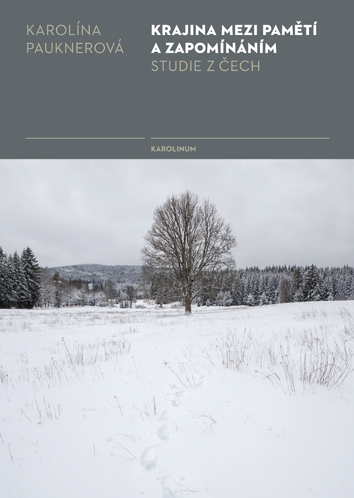
Karolína Pauknerová’s book reveals the variability of the ways in which memory becomes part of the landscape, sedimenting in it, reproducing itself and disappearing. Using several examples – the surroundings of the Příbram road, the recollection of vanished settlements in the borderlands, megalithic buildings in southern Bohemia – she presents the landscape as a process that is co-created by memory as well as forgetting. To be in the landscape entails thinking about memory, immersing oneself in the passage of time, experiencing its traces and their absence. Without this immersion, it is impossible to understand either the landscape or the memory hidden in it.
Latest from Blog
4 – 5 June 2026 | 1 min read On 4–5 June 2026, Humboldt University of
In 2026, the course will be held in English to welcome an international audience. Registration is now

We are happy to announce that registration for the micro-credential learning program Anthropocene: The Contemporary World
On October 9–10, 2025, Charles University will host the workshop Anthropocene Ruptures: Crossing Borders, Building Connections.

We are pleased to announce that our project “Anthropocene Ruptures: Crossing Borders, Building Connections” has been